Finding a Mineral Sunscreen You’ll Actually Want to Wear
Mineral sunscreen has come a long way from the thick, chalky formulas many people still associate with beach holidays and white noses. Today’s best options can be sheer, elegant, comfortable under makeup, and suitable for sensitive or reactive skin. Yet finding one you genuinely enjoy wearing every day still takes a bit of know-how.
The good news? Once you understand what separates a good mineral SPF from a frustrating one, it becomes much easier to choose a formula that fits your skin, your routine, and your standards.
Why Mineral Sunscreen Appeals to So Many People
Mineral sunscreens use physical UV filters, most commonly zinc oxide and titanium dioxide, to help protect the skin from ultraviolet radiation. Unlike chemical filters, which absorb UV rays and convert them into heat, mineral filters sit on the skin’s surface and scatter or reflect UV light while also absorbing some of it.
That difference matters to many people, especially those with sensitive skin. Zinc oxide in particular is known for offering broad-spectrum protection, including strong UVA coverage, which is important for reducing long-term photoageing and pigmentation concerns.
Mineral SPF is often preferred by people who:
Experience stinging or irritation from chemical sunscreens
Have rosacea, eczema-prone, or post-procedure skin
Want a sunscreen that is less likely to cause eye irritation
Prefer formulas with fewer active UV filter ingredients
Of course, “mineral” does not automatically mean “better” for everyone. The best sunscreen is still the one you will apply generously and consistently. If a product pills, leaves a heavy cast, or feels greasy by midday, it is unlikely to earn a permanent place in your routine.
The Biggest Challenge: Wearability
Ask most people why they gave up on mineral sunscreen and you will hear similar complaints: it looked too white, felt too thick, or never really settled into the skin. These issues come from the nature of mineral filters themselves. Zinc oxide and titanium dioxide are naturally opaque powders, which is exactly why they can leave a visible residue.
However, modern formulation has changed the conversation. Advances in particle dispersion, blending technology, and supporting ingredients have made mineral SPF far more wearable than it once was. Many newer products use micronised particles, skin-adaptive tints, hydrating bases, or silicone-based textures to create a smoother finish.
This is also why comparing mineral sunscreens purely by SPF number is not enough. Two SPF 50 products can feel completely different on the skin. One may be dense and matte, while another feels more like a lightweight moisturiser. When browsing options such asmineral-based SPF products, it helps to look beyond the headline protection level and consider finish, tint, skin compatibility, and how the product fits into your daily routine.
What to Look for on the Label
A mineral sunscreen label can tell you quite a lot if you know what to check. The active ingredients should include zinc oxide, titanium dioxide, or both. For broad-spectrum daily protection, zinc oxide is especially valuable because it covers a wide range of UVA and UVB wavelengths.
Broad-Spectrum Protection
Always look for “broad spectrum” on the packaging. UVB rays are responsible for sunburn, but UVA rays penetrate more deeply and contribute heavily to premature ageing, uneven tone, and pigmentation. UVA exposure is present throughout the year and passes through window glass, making daily protection relevant even when the weather looks dull.
SPF 30 or Higher
Dermatologists commonly recommend at least SPF 30 for daily use, with SPF 50 often preferred if you spend time outdoors, use retinoids or exfoliating acids, or are prone to hyperpigmentation. The higher number does not mean you can apply less, though. Sunscreen testing is based on a generous amount of product, so under-application can dramatically reduce real-world protection.
Tint and Iron Oxides
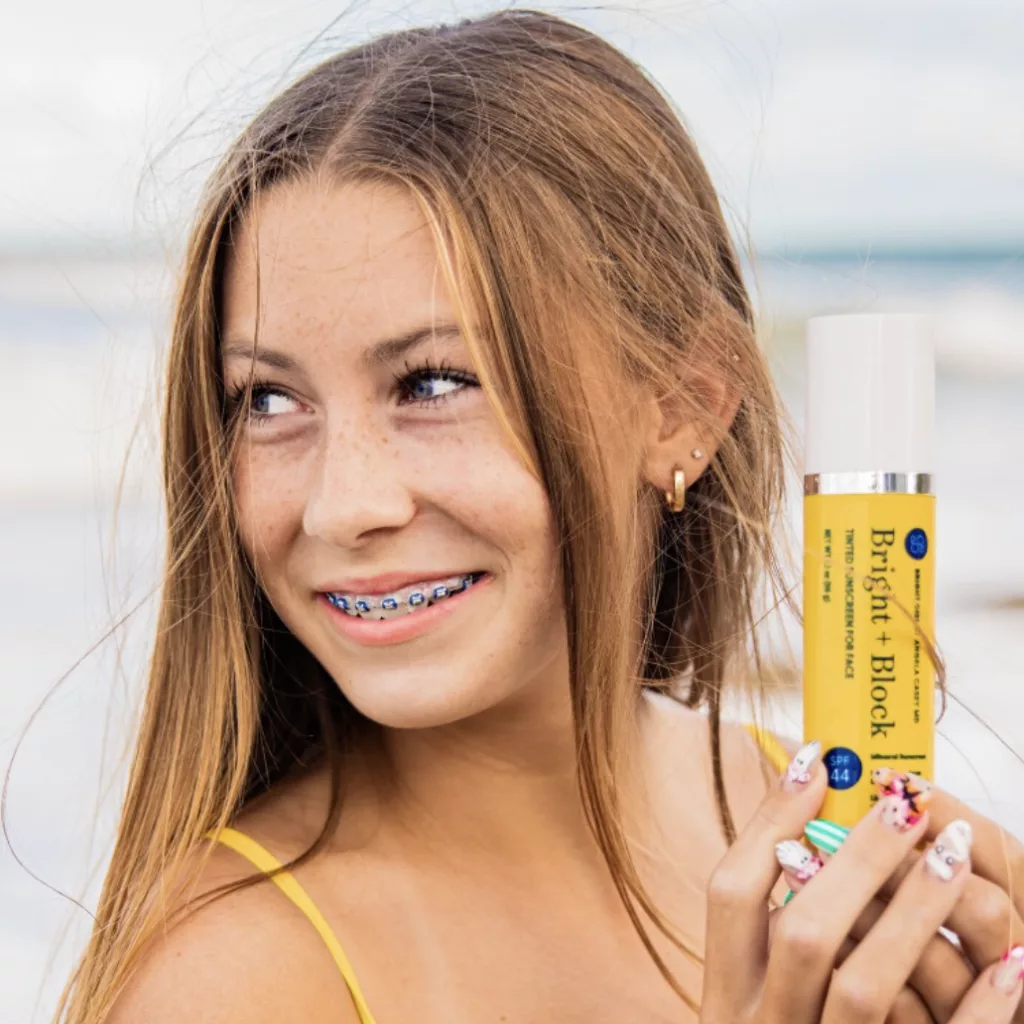
If you struggle with white cast, a tinted mineral sunscreen may be your best option. Tints help offset the pale appearance of mineral filters, especially on medium to deep skin tones. Some tinted formulas also contain iron oxides, which can help protect against visible light — a relevant factor for people dealing with melasma or stubborn pigmentation.
Matching Mineral SPF to Your Skin Type
A sunscreen can be technically excellent and still not be right for your skin. Texture, finish, and supporting ingredients make a major difference.
For Oily or Acne-Prone Skin
Look for lightweight, non-comedogenic formulas with a natural or matte finish. Gel-cream textures, fluid lotions, and silicone-based mineral sunscreens often work well because they spread thinly and resist heaviness. Avoid overly rich balms unless your skin is also dehydrated or compromised.
It is worth noting that sunscreen itself is not always the cause of breakouts. Sometimes the issue is incomplete cleansing at night, especially with water-resistant formulas. A gentle double cleanse can help remove SPF without stripping the skin.
For Dry or Mature Skin
Mineral filters can sometimes feel drying, so seek out formulas with humectants and barrier-supporting ingredients such as glycerin, hyaluronic acid, squalane, ceramides, or niacinamide. A dewy finish may sit more comfortably than a matte one, particularly if your skin tends to look tight or dull by the afternoon.
Layering matters here. Apply moisturiser first, allow it to absorb, then follow with sunscreen. If you rush the layers, even a good formula may pill.
For Sensitive or Reactive Skin
Mineral sunscreen is often a sensible starting point for reactive skin, but the full ingredient list still matters. Fragrance, essential oils, and high levels of alcohol can be problematic for some people. Choose simple, well-formulated products and patch test before applying to the entire face.
If your skin is recovering from a procedure, such as a peel or laser treatment, follow your clinician’s recommendations. Post-treatment skin can be unusually vulnerable to UV damage.
How to Apply It So It Actually Performs
Even the best sunscreen cannot protect properly if it is applied too thinly. For the face and neck, many experts suggest using roughly two finger lengths of product, though this varies slightly depending on face size and formula density.
Apply sunscreen as the final step of your morning skincare routine, after moisturiser and before makeup. Let it settle for a few minutes before applying foundation or concealer. If pilling occurs, reduce the number of layers underneath, avoid rubbing aggressively, and press the product in rather than dragging it across the skin.
Reapplication is the part most people skip. If you are indoors most of the day, one morning application may be reasonable, but if you are outside, sweating, driving for long periods, or sitting near strong daylight, reapply every two hours. Powder SPFs and SPF mists can be useful top-ups, but they should not replace a proper initial layer.
The White Cast Question
White cast is not just an aesthetic inconvenience. If a sunscreen looks obvious or unflattering, people naturally use less of it or avoid it altogether. That undermines protection.
If you have deeper skin, search specifically for tinted mineral sunscreens tested across diverse skin tones. Sheer universal tints can work for some, but not all. A formula that disappears on fair skin may still look ashy on brown or black skin. This is one area where reviews, swatches, and sample sizes can save a lot of frustration.
The Bottom Line
Finding a mineral sunscreen you actually want to wear is less about chasing the “perfect” product and more about understanding what your skin needs. Look for broad-spectrum protection, a texture you enjoy, a finish that suits your routine, and a formula you can apply generously without hesitation.
Sunscreen is not just for beach days or summer holidays. It is a daily skin health habit, and consistency matters far more than novelty. When your SPF feels comfortable, looks good, and works with the rest of your routine, wearing it stops feeling like a chore — and that is when real protection begins.
Hi there! I am Emily Evert, the owner of Emily Reviews. I am 28 and live in a small town in Michigan with my boyfriend Ryan and our two pugs. I have a large family and I adore my nieces and nephews. I love reading memoirs, and learning about child development and psychology. I love watching The Game of Thrones, Teen Mom, Sister Wives and Veep. I like listening to Jason Isbell, John Prine, and other alt-country or Americana music. I created Emily Reviews as a creative outlet to share my life and the products that I love with others.






Leave a Reply